Today's episode features Deborah Dempsey, MBA, Pharm.D., RPh, and Taylor Mishlanie, MBA, Pharm.D., RPh
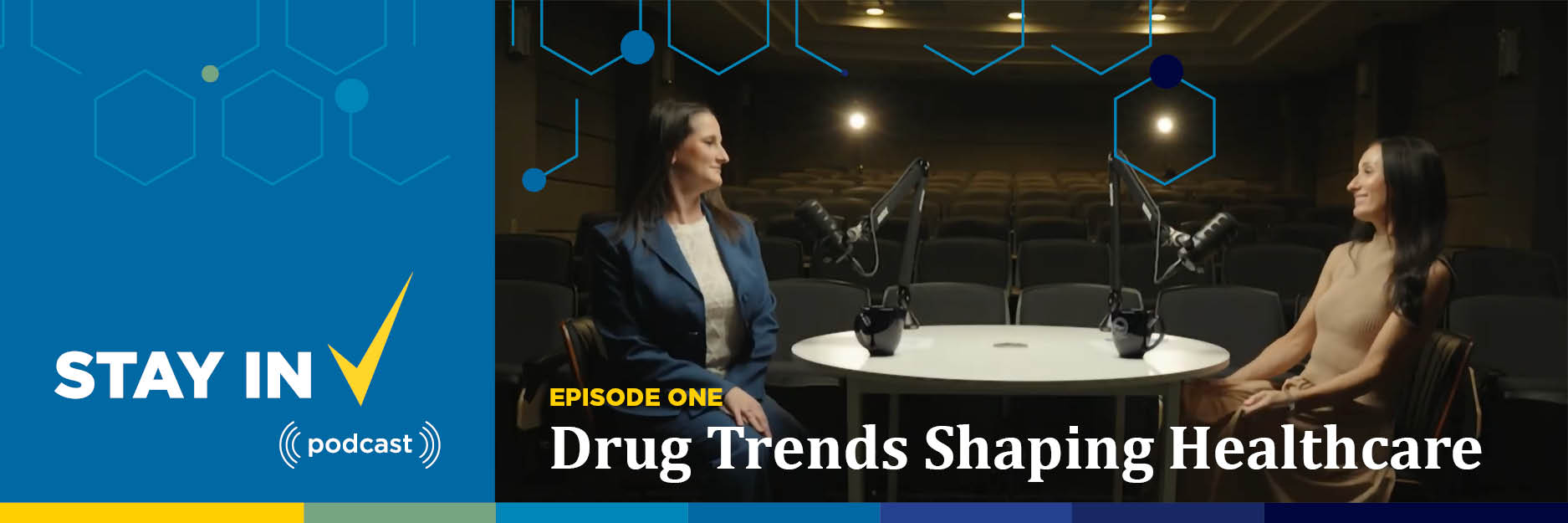
What do plan sponsors need to know to make fair and sustainable plan decisions? What trends are changing the industry and how is ProAct adapting and evolving to continue to provide significant value to our plan sponsors and positive health outcomes for our members? On this episode of the Stay in Check podcast, ProAct’s COO, Deborah Dempsey, is joined by ProAct’s Director of Clinical Operations, Taylor Mishlanie, to talk about the drug trends that are shaping healthcare and what plan sponsors should know.
GLP-1s have seen growth the past several years, and although we are seeing the market mature and growth start to level off, new indications along with new drugs to market are affecting plan spend. Having a strategy in place is crucial. "I think we have a lot of different options, and that it really depends on the client," says Taylor Mishlanie. "When it comes to GLP-1 management, first, is of course, utilization management, prior authorizations, really making sure that we’re reviewing these medications and that they’re being used in the right way, by the right patients and then having additional support [like Omada Health] for chronic disease management."
Diabetes patients are now seeing more technology like tubeless insulin pumps becoming available to help better manage their condition. “This [technology] does come with added spend,” says Deborah Dempsey. “Considerations need to be taken into account on what this will do to overall plan spend. It’s important that plan sponsors keep this in mind as we move forward with more technological advances in this space.”
DTC programs process outside of insurance and can be accessed directly through a drug manufacturers website or through programs like Trumprx.gov. “These programs really are designed for that cash-paying patient that maybe doesn't have drug coverage at all. We're also seeing some medications on the Trumprx.gov website that are brand-name medications that have generic medications available already,” says Deborah Dempsey. “In those situations, it makes more sense for a member to take the generic medication which is lower cost.”
Humira and Stelara, two big name medications in the anti-inflammatory space, have had biosimilars become available within the past few years. While some patients and providers may have been hesitant to make the switch when they were first made available, we’re now seeing much higher adoption rates. Tayor Mishlanie adds, “[Adoption] can save plans upwards of 80% transitioning from that brand product to the biosimilar.”
Specialty medications are medications used to treat complex, chronic conditions and are typically higher-cost medications, like orphan medications, oncology medications, and gene therapies. “It's really exciting to see what technology and medicine together are doing to treat some of these [indications] that we thought were incurable,” says Deborah Dempsey. “It’s exciting from that standpoint, but also, the cost is concerning. It’s something that we need to make sure that our plan sponsors are aware of and prepared for and have strategies in place.”
While PBMs like ProAct, being in the commercial space, don’t have a direct impact on Medicare’s maximum fair prices that are showing up in the governmental space, we often hear questions from plan sponsors on what it means for them. “For the drug manufacturers that don't decide to lower their list price or just lower it in accordance with Medicaid/Medicare rules and regulations, they could potentially look to try to make up some of that loss in revenue on the commercial side,” says Deborah Dempsey.
View the full podcast “Drug Trends Shaping Healthcare”.
Contact your dedicated Account Manager or Sales Director for more information.